

Maryland DNR biologists Joe Love (second from right) and Dan Goetz (second from left) worked with Captain Nick Mather (left) of Working Class Outdoors to harvest 23 Chesapeake Channa, or northern snakeheads, as part of its collaborative project with the U.S. Fish and Wildlife Service. The team is working to learn more about how bowfishing is helping to control the invasive predator’s population. Maryland DNR photo
A new Maryland Department of Natural Resources study revealed that bowfishing and gigging – using a pronged spear – are the most common ways Chesapeake Channa (also known as northern snakehead) are harvested in Maryland. These methods eclipse hook-and-line, commercial, and departmental management harvest of the invasive fish.
The study, published in Integrated and Comparative Biology, also found that bowfishermen are successfully removing larger, more fecund female Channa (those with more eggs) than traditional anglers, a key factor in limiting population growth.

Matt Foreman of Crownsville holds the state record Chesapeake Channa, a 21.8-pound fish caught June 7, 2025. Foreman used a Vadersbow Saber X bow with a generic tip to catch his record fish. Photo courtesy Matt Foreman.
Invasive species are inherently difficult to manage, as they are equipped with biological adaptations that enable them to multiply and spread effectively in an environment with limited ecological pressures. This is the challenge Maryland DNR fisheries managers face with Chesapeake Channa, which are native to Asia and were illegally introduced to Maryland waters in the early 2000s. They are now so widespread in the Chesapeake Bay region that eradicating them is likely not realistic.
Managers are focused on reducing their numbers and finding beneficial uses to limit their impact on the local ecosystem. Chesapeake Channa can impact ecosystems that include recreationally and commercially valuable species.
As anglers’ interest in catching these fish grew, bowfishing became one of the most popular ways to harvest them. Instead of casting a hook and line, bowfishers use a bow and arrow with a retrieval line to impale a fish within sight of the angler.
“Bowfishing is an important component of the fishery, annually removing approximately 20% of the population in the upper Chesapeake Bay,” said study author and DNR biologist Dr. Joseph Love. “We are always looking for creative, responsible ways to get us closer to our needed targets for managing these populations.”
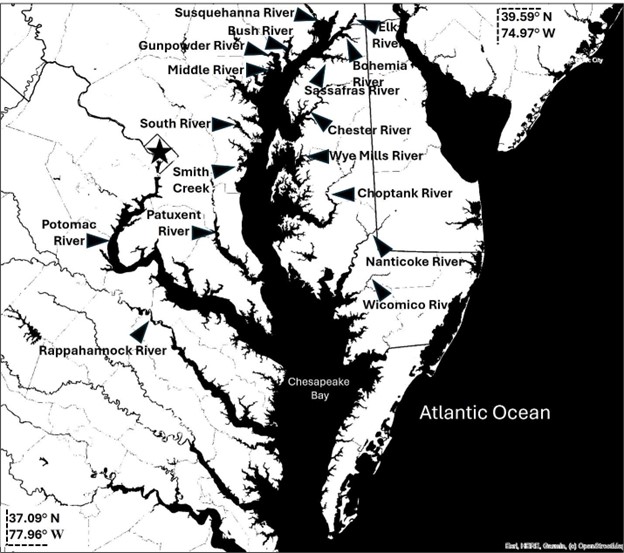
Scientists studied numerous locations in the Bay and its tributaries.
From 2022 to 2024, biologists worked with the U.S. Fish and Wildlife Service’s Maryland Fish and Wildlife Conservation Office to tag snakeheads and get data from bowfishing charter boat captains. Data for this study were collected in three formats: in-person trips by biologists on bowfishing charters, diary logs of customer charter trips by captains, and reports of harvest of tagged fish by bowfishermen and hook-and-line anglers. The results of Dr. Love and coauthors’ work were recently published in a paper titled “Harvest of Northern Snakehead with Bowfishing in Maryland.”
In 2024 alone, ten charter boat captains reported more than 550 bowfishing trips across 17 rivers. Most trips lasted about five hours and included an average of four people. Catches varied widely, from zero to more than 30 in a single trip, but the typical trip removed about ten Channa. Harvesting was highest in spring and fall and during full or new moons.
“We learned how many they harvested per night, but needed to learn more about what that meant for the fishery,” Love said.
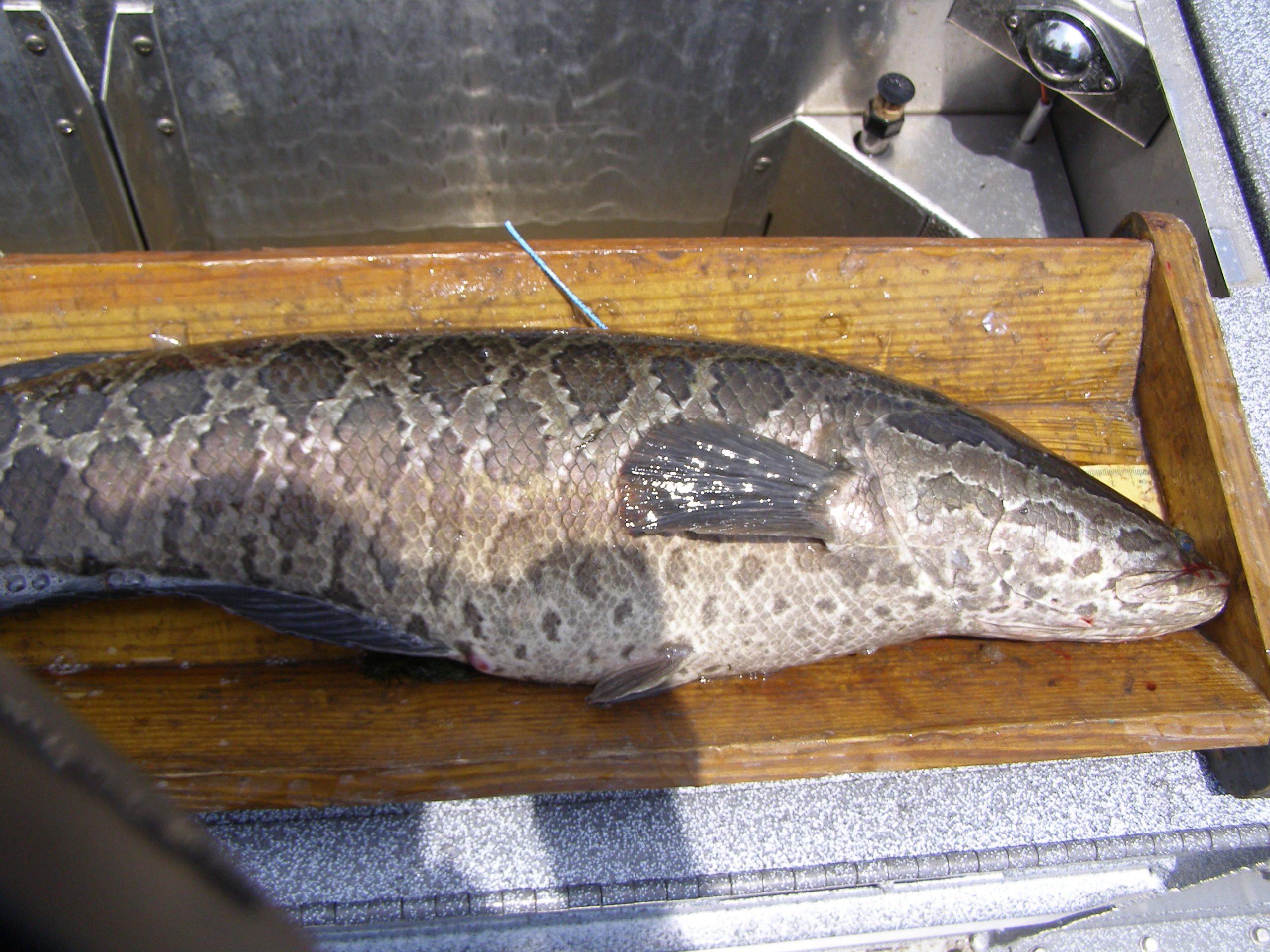
A tagged Chesapeake Channa from the study. US Fish and Wildlife Service photo.
In the tagged fish study in the upper Chesapeake Bay, biologists deployed 657 tags on Channa. A total of 149 tags were reported, with 80 tags reported by bowfishermen compared to 65 from hook-and-line anglers. After addressing reporting biases, the department learned that a greater fraction of the harvest in the fishery came from bowfishing than from hook-and-line. Harvest by DNR during electrofishing surveys accounted for a small amount of removals annually, so this study supports what managers and fishers already suspected— bowfishers harvest a lot of snakeheads.
The introduction of Channa has been shown to impact native fish communities, so the department encourages the harvest of all Channa caught. There is no limit or season on invasive fish, and they are considered an excellent eating fish. Because they are so widespread, there are many places anglers can try their hand at fishing for them.
Anglers interested in finding a bowfishing charter for Chesapeake Channa can search for guides in the Maryland Outdoor Recreation Business Directory maintained by DNR’s Office of Outdoor Recreation.
Fishing licenses, as well as tackle, boat, and marine fuel purchases, fund DNR’s fish conservation work. Fishing licenses can be purchased online through MD Outdoors or in person at license agent locations.
